Accueil
Solutions

...

Environnement Écologique

Environnement écologique

Vue d’ensemble

Les solutions pour l’environnement écologique se concentrent sur des zones naturelles clés telles que les forêts, les rivières, les réservoirs et les eaux côtières, en utilisant des caméras thermiques, des radars, des drones et des capteurs IoT afin de créer un réseau de surveillance unifié. En combinant la détection du niveau d’eau et des objets flottants avec l’alerte précoce en cas de fumée et d’incendie, la plateforme offre une visibilité en temps réel sur les risques d’incendie de forêt, les inondations et les événements de pollution. Elle permet ainsi de localiser rapidement les incidents, de coordonner les interventions d’urgence et d’assurer une protection écologique à long terme, à la fois pour les écosystèmes et les communautés environnantes.

1

Forest

2

Water Area

1

Forest

2

Water Area

Forest

Défis

Forests and national parks often stretch across steep slopes and deep valleys, where human patrols are slow and traditional cameras struggle with distance, night-time darkness, and haze. Early fire points are tiny and easily masked by vegetation, while clouds, fog, and sunlight can cause false alarms. Without reliable long-range detection from high positions, it is difficult to spot small ignition points or thin smoke in time, leading to delayed response and greater risk of large wildfires.

Forests and national parks often stretch across steep slopes and deep valleys, where human patrols are slow and traditional cameras struggle with distance, night-time darkness, and haze. Early fire points are tiny and easily masked by vegetation, while clouds, fog, and sunlight can cause false alarms. Without reliable long-range detection from high positions, it is difficult to spot small ignition points or thin smoke in time, leading to delayed response and greater risk of large wildfires.

Ce que nous proposons

Long-Range Thermal Fire-Point Detection

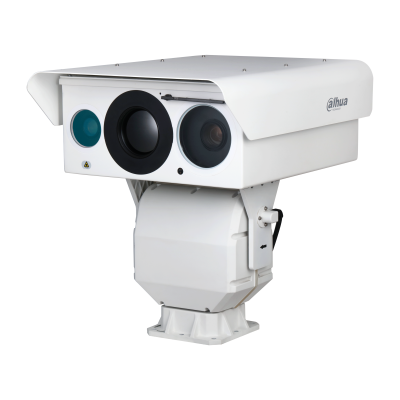
Tower-mounted thermal units continuously scan the forest landscape to capture subtle heat changes and identify early fire points at long distances. Intelligent algorithms analyze thermal images to distinguish true hotspots from background temperature variations, even at night or in low visibility. Detection zones can be customized to follow ridgelines or key protection areas, allowing operators to focus on high-risk regions and receive precise, geo-referenced fire alerts.

Long-Range Thermal Fire-Point Detection
Wide-Area Smoke Plume Detection and Verification

Visible-light monitoring on the same tower tracks smoke plumes across valleys and hillsides, detecting abnormal smoke columns and drift patterns over several kilometers. By correlating thermal hotspots with visible smoke, the system reduces false alarms from sunlight, fog, or industrial heat sources and provides clearer visual evidence for operators. This dual-view approach supports faster confirmation of suspected fires, more accurate assessment of fire size and location, and more effective dispatch of firefighting resources.

Water Area

Défis

Conventional water level gauges are point-based and easily affected by damage, silt, or waves, while ordinary cameras can only provide visual reference without accurate data. Many sites lack linkage between water warnings and video verification, so abnormal rises, backflow, or blocked channels may not be discovered until flooding or overflow occurs. Manual patrols are time-consuming, especially in long river sections and remote areas, leading to delayed awareness of sudden storms or upstream discharges.

Conventional water level gauges are point-based and easily affected by damage, silt, or waves, while ordinary cameras can only provide visual reference without accurate data. Many sites lack linkage between water warnings and video verification, so abnormal rises, backflow, or blocked channels may not be discovered until flooding or overflow occurs. Manual patrols are time-consuming, especially in long river sections and remote areas, leading to delayed awareness of sudden storms or upstream discharges.

Ce que nous proposons

High-Precision Radar Water-Level Monitoring

The solution uses radar-based level measurement combined with automatic pan-tilt control to achieve millimeter-level accuracy over long distances. It continuously tracks water level changes in rivers, lakes, and sluice inlets, filters out wave interference, and supports threshold alarms for rapid rise, rapid drop, or exceeding warning lines. Linked with hydrology platforms, real-time curves and historical trends help managers assess flood risk, dispatch gates and pumps, and make data-driven decisions for flood control and drought relief.

High-Precision Radar Water-Level Monitoring
Visual Detection of Floating Objects and Surface Anomalies

On the same platform, intelligent video analysis identifies floating debris, branches, trash, and oil films on the water surface, as well as abnormal discharge from outlets and surrounding facilities. When large floating objects threaten bridges or sluices, or when pollution-like phenomena appear, the system pushes alarms with snapshots and short clips to operation teams. This supports targeted cleaning, rapid removal of obstructions, and early handling of pollution events, keeping waterways safer and cleaner while reducing reliance on manual inspection.