Accueil
Solutions

...

Transport

Bus

Vue d’ensemble

Les systèmes de transport public dans le monde assurent plus de 50 % des déplacements urbains, mais font face à un taux élevé d’accidents, avec plus d’un million d’accidents chaque année. Les solutions embarquées pour bus de Dahua contribuent à réduire significativement le taux d’accidents et à renforcer la sécurité opérationnelle grâce à la surveillance intelligente, à l’analyse du comportement des conducteurs, aux statistiques de flux de passagers et aux systèmes d’alerte précoce en temps réel. Elles fournissent des données opérationnelles scientifiques et offrent un support technique efficace et fiable aux systèmes de transport public dans le monde entier.

1

Driving Seat

2

Vehicle blind spots

3

Bus door

1

Driving Seat

2

Vehicle blind spots

3

Bus door

Driving Seat

Défis

Public buses operate in complex urban traffic environments, with most accidents stemming from driver fatigue or distracted driving, resulting in loss of life and property. Installing active safety systems provides multiple safety alerts, including fatigue detection, collision warnings, and lane departure warnings.

Public buses operate in complex urban traffic environments, with most accidents stemming from driver fatigue or distracted driving, resulting in loss of life and property. Installing active safety systems provides multiple safety alerts, including fatigue detection, collision warnings, and lane departure warnings.

Ce que nous proposons

Active safety

Using DMS cameras and ADAS systems, the system continuously monitors driver misconduct (such as smoking, using phones, yawning, or closing eyes) and hazardous driving conditions (such as following too closely or lane drifting). It triggers audible and visual alerts to prompt immediate correction and reports incidents to the central platform. Vehicles that repeatedly exhibit dangerous driving behavior are subject to remote manual intervention.

Active safety

Vehicle blind spots

Défis

Buses have significant blind spots—including four major areas: the front blind spot, rear blind spot, mirror blind spot, and A/B-pillar blind spot—making collisions with pedestrians and non-motorized vehicles in these areas common and often resulting in serious accidents with casualties.

Buses have significant blind spots—including four major areas: the front blind spot, rear blind spot, mirror blind spot, and A/B-pillar blind spot—making collisions with pedestrians and non-motorized vehicles in these areas common and often resulting in serious accidents with casualties.

Ce que nous proposons

360° Surround view

Surround-view cameras installed around the vehicle body generate a 360-degree panoramic view of the surrounding environment through image synthesis, distortion correction, and raw image overlay and fusion technology. This real-time feed is transmitted to the display screen, providing drivers with comprehensive visibility during turns or reversing maneuvers to enhance situational awareness.

360° Surround view

Bus door

Défis

Bus dispatchers often lack access to detailed passenger flow data across routes, which hinders efforts to optimize capacity utilization and plan new routes. By deploying passenger flow cameras at boarding and alighting doors, data on passenger volumes at each stop along every route can be collected, providing reliable insights for bus companies to improve route operations.

Bus dispatchers often lack access to detailed passenger flow data across routes, which hinders efforts to optimize capacity utilization and plan new routes. By deploying passenger flow cameras at boarding and alighting doors, data on passenger volumes at each stop along every route can be collected, providing reliable insights for bus companies to improve route operations.

Ce que nous proposons

Passenger flow statistics

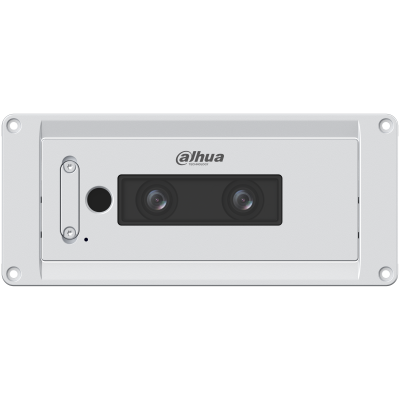
By installing passenger flow counting cameras above boarding and alighting doors, the system intelligently tracks and counts passengers boarding and alighting in coordination with vehicle door opening/closing signals. Data is aggregated by stop and time and reported to the central platform, aiding precise spatiotemporal passenger flow analysis to optimize bus scheduling and dispatch.

Passenger flow statistics