Connecting device, location, people and data into one unified platform, enhancing city safety and urban governance, collaborating with partners, and building a smarter society together.
Public Spaces
Checkpoints
Intersecton
Road
Command Center
Public Spaces
Checkpoints
Intersecton
Road
Command Center
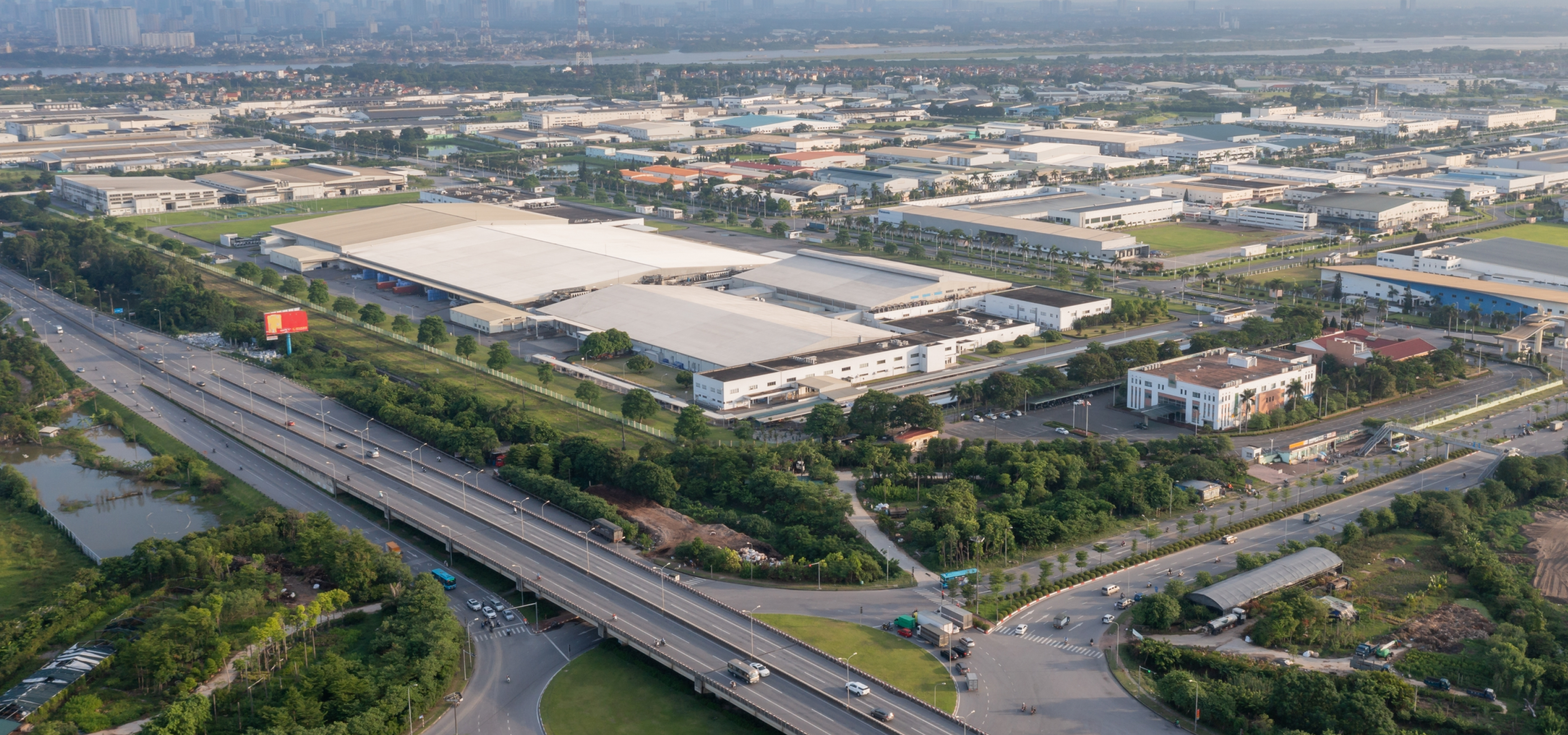
Modern public spaces such as scenic spots, transport hubs and waterfront squares have large, fluctuating flows of people and vehicles, making it hard to see risks in time. Relying on scattered cameras and manual patrols means crowd gatherings, abnormal traffic events and congestion are often discovered only after they have escalated into incidents. Cross-department coordination is slow, on-site forces cannot be dispatched accurately, and there is no effective closed loop from early warning to case handling and follow-up analysis. This leads to blind spots in prevention, delayed response to emergencies, and difficulty achieving refined, data-driven governance of public areas.
Dahua’s AI crowd detection continuously analyzes people density and movement in city squares, helping operators identify congestion, unusual gatherings, or sudden surges in real time. When thresholds are exceeded, the system can trigger alerts, guide on-site staff to intervene early, and support smart broadcasting or guidance on screens. This proactive monitoring reduces the risk of stampedes, conflicts, and accidents, keeping public spaces safer and more orderly.
By applying face recognition at key viewpoints around the square, Dahua helps authorities quickly identify persons of interest, missing individuals, or repeat offenders, while supporting configurable privacy and compliance settings. Linked with watch lists and event tracing, the system enables fast post-incident backtracking and evidence retrieval. This significantly enhances security efficiency, shortens investigation time, and improves citizens’ sense of safety in public squares.
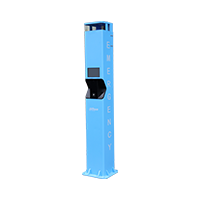
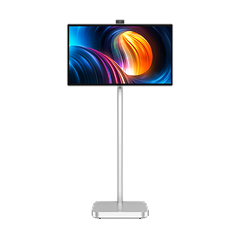
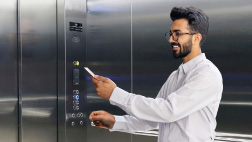
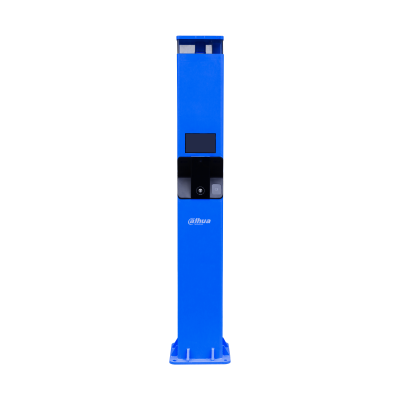
In city parks and other open public spaces, incidents such as lost children, disoriented elderly people, or sudden medical emergencies can quickly become life-threatening if help is not requested in time. Dahua’s smart emergency call points integrate alarm, video monitoring, and broadcasting, enabling one-touch audio and video emergency calls that immediately connect citizens with park management or the police. Operators can verify the situation through live video and two-way talk, then dispatch support without delay, shortening response time and significantly improving rescue efficiency and safety in public parks.
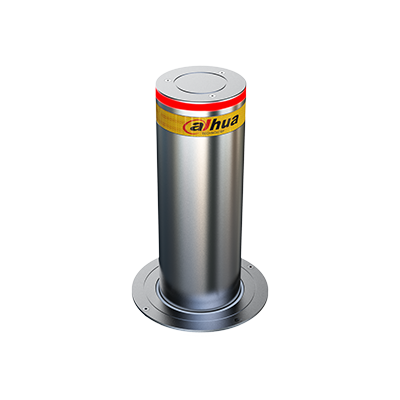
Many checkpoints still rely on basic barrier gates and single-angle cameras, making it hard to see the entire queuing area or clearly record both vehicle plates and driver/passenger identities. Blind spots, manual checks, and low image quality can lead to missed suspicious vehicles, inefficient inspections, and difficulties in tracing incidents after an event. Cities need a smarter way to improve situational awareness while keeping traffic flowing smoothly.
Dahua provides panoramic high-point monitoring that covers all lanes, waiting areas, and surrounding road sections at city entrances. Multi-target tracking and visual overlays help operators see vehicle queues, lane usage, and abnormal movements in real time, enabling faster detection of congestion, violations, or risky behaviors. This comprehensive view gives command centers a clear, intuitive picture of checkpoint operations and supports smarter on-site management.
By applying face recognition at key viewpoints around the square, Dahua helps authorities quickly identify persons of interest, missing individuals, or repeat offenders, while supporting configurable privacy and compliance settings. Linked with watch lists and event tracing, the system enables fast post-incident backtracking and evidence retrieval. This significantly enhances security efficiency, shortens investigation time, and improves citizens’ sense of safety in public squares.
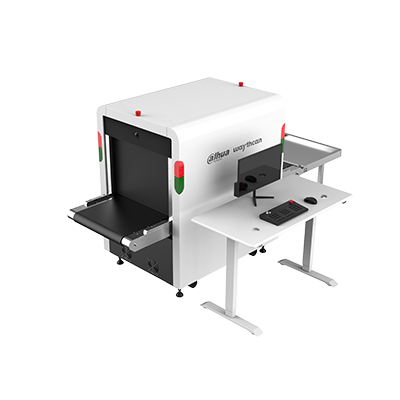
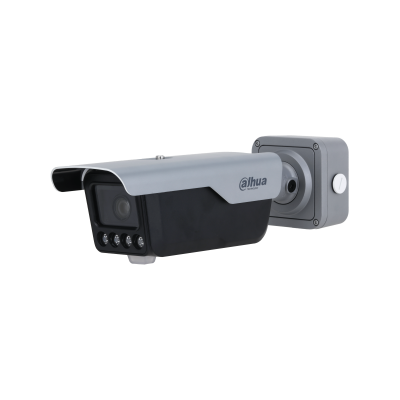
Dahua’s checkpoint solution also focuses on precise, lane-level recording of vehicles and occupants. It simultaneously captures license plates, vehicle characteristics, and the faces of drivers and passengers as they enter the city, creating a complete, time-stamped record for each vehicle. By correlating people and vehicle data and supporting blocklist/allowlist strategies, the system strengthens access control, improves investigation efficiency, and enhances overall security at urban gateways.
Traditional monitoring at intersections often relies on single-view cameras that either cover only part of the scene or focus on a single approach. This creates blind spots and makes it difficult to simultaneously observe the full traffic pattern and capture close-up details of violations or accidents. As traffic volumes grow, operators struggle to judge queues, conflicts between people and vehicles, and abnormal incidents in time, which impacts both road safety and traffic efficiency.
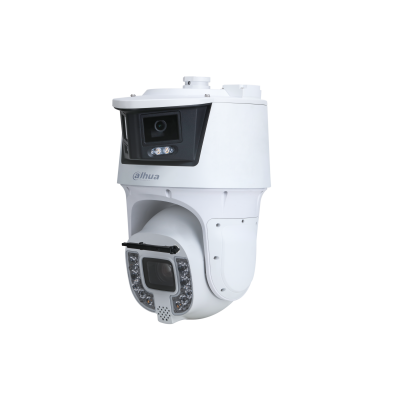
Dahua provides a panoramic intersection solution that delivers a wide-angle overview of the entire crossroads, including all approaches, crosswalks, and waiting areas. Operators can clearly see overall traffic flow, lane queues, and pedestrian movements in real time, helping them quickly identify congestion, blocked lanes, or unsafe behaviors. This full-scene awareness supports smarter signal control and targeted on-site interventions.
Complementing the panoramic view, the solution offers flexible detail tracking for vehicles and pedestrians at the intersection. Operators can zoom in on specific lanes, crosswalks, or incidents to capture clear evidence of violations such as red-light running, illegal turns, and dangerous pedestrian crossings. Intelligent analysis assists in detecting abnormal behavior and potential conflicts, improving incident handling, post-event review, and overall intersection safety.
On many urban roads, pedestrians, non-motor vehicles, and motor vehicles mix together, making it easy for speeding, illegal lane changes, and random parking to occur. Traditional cameras often cover only a single lane or a small area, leaving blind spots where violations and accidents are missed. At the same time, manual enforcement is resource-intensive and cannot provide 24/7, lane-by-lane evidence. Cities need a way to clearly capture every vehicle, accurately identify violations, and turn fragmented images into reliable decision data.
Dahua road cameras provide high-definition coverage of up to three lanes, ensuring that each vehicle entering the field of view can be clearly captured. Built-in algorithms recognize license plates, vehicle types, and colors, delivering structured vehicle data that supports investigation, statistics, and follow-up analysis.
The system can detect multiple types of traffic violations on the same road section such as speeding, illegal lane changes, wrong-way driving, and illegal parking, and automatically trigger snapshots and video clips. Each event is linked with time, location, and vehicle information, forming a complete evidence chain to support law enforcement and traffic management.
In many cities, surveillance, traffic, emergency, and urban management platforms run on separate screens and workstations. Operators must switch between interfaces and cannot gain a clear, citywide picture in real time. This fragmented view makes it difficult to spot cross-area incidents, coordinate multiple agencies, and support “one screen to see the whole city, one network to manage the city”.
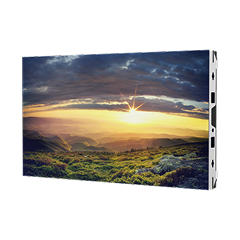
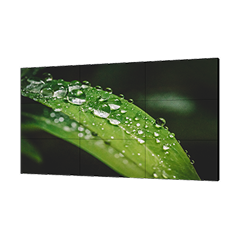
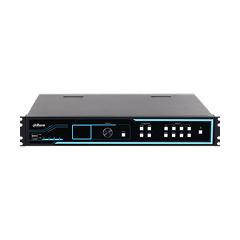
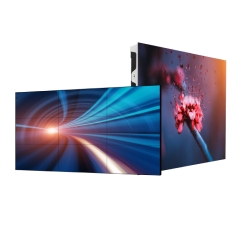
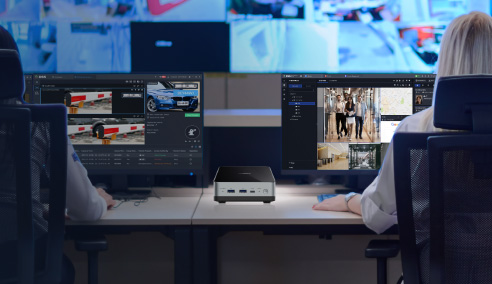
Dahua enables city command centers to build integrated visualization and dispatch capabilities using high-definition video walls, LCD splicing displays, and a professional signal-processing platform. Multi-source feeds—from live cameras, maps, IoT data, and business systems—can be flexibly accessed, spliced, and displayed in custom layouts, supporting window roaming, zooming, and one-click scene switching. This unified view helps operators quickly grasp the overall urban situation, focus on key hotspots, and coordinate cross-department responses more efficiently and reliably.